You know the story. Bananas going ripe. Must make banana bread. Especially as the weather is getting cooler. I did have a day of "I'm totally going to freeze the remaining bananas for smoothies" but then I got over it. Next time, I promise. In the meantime, there's Nigella's Italian breakfast banana bread. Which can be consumed at any time of day, thankfully.
Ingredients:
150mL flavourless vegetable oil
3 medium bananas, very ripe (about 400g with skin on, 300g without)
2 teaspoons vanilla extract
pinch salt
2 eggs
150g caster sugar
175g plain flour
1/2 teaspoon bicarbonate of soda
4 teaspoons instant espresso powder
Method:
Place a baking sheet in the oven, and preheat to 170C. Line a loaf tin with baking paper or lightly oil it.
Mash the bananas with the vanilla and salt, then beat in the oil.
Beat in the eggs, one by one, followed by the sugar.
Mix the flour with the bicarb and espresso powder, and beat these dry ingredients into the runny batter.
Pour the batter into the prepared loaf tin, then pop it into the oven, on the baking sheet. Bake for 50-60 minutes, or until slightly coming away at the sides and bulgingly risen. A cake tester should come out clean, barring the odd crumb. Leave for at least half a day before slicing into it. Really.
I made this one evening, so my whole house smelt deliciously of baking the whole evening. It is really quick and easy to whip up, too. Mine didn't rise 'bulgingly' though, and after leaving it in the oven overnight (yes I turned it off) it had sunk a little, so it was wider rather than higher. No matter - it was still deliciously moist and banana-y. Nigella recommends chocolate spread (yum! - but not a good thing for me) or mascarpone sprinkled with cinnamon. I went with quark sprinkled with cinnamon. Yum. And I was really really good - I sliced the leftovers and put them in the freezer for later. Sorry for all the smug vibes permeating the blogosphere.
If You Always Do What You've Always Done...Then You'll Always Get What You Always Got
Showing posts with label Nigella Lawson. Show all posts
Monday, 8 April 2013
Thursday, 4 April 2013
Lamb with Anchovies and Thyme
Holidays mean more time for cooking. Easter means lamb. Now, I'm not an anchovy enthusiast. It's not just they're super salty - it's the hairiness that gets me. However, I tend to trust cookbooks from reputable cooks. So I took a deep breath, crossed my fingers, and hoped this was another of those 'you have to taste it' cases. Thankfully, it was (thanks Nigella!). Any more anchovy and it would have been too much, but this level was acceptable, adding more of a salty overtone rather than an "I'm eating anchovies" blast.
Ingredients:
1 x 15mL tablespoon olive oil (I just estimated, as per normal - next time I'll use less; and, should be garlic oil but I don't have any)
2 boneless lamb leg steaks (approx. 100g each)
4 anchovy fillets (conveniently, one small tin of Always Fresh)
leaves from a few sprigs fresh thyme, approx. 1 teaspoonful
1/4 cup rose wine (or, if you want to be true to Nigella, martini or cinzano rosato)
Method:
Warm the oil in a heavy-based, non-stick frying pan and fry the lamb for about 2 minutes per side, or until they are done to your liking.
Remove the steaks to a board lined with foil and turn up the ends so any meat juices that run out are contained.
Off the heat, add the anchovy fillets to the pan and stir until they start to break up and begin melting into the pan. (Warning: this made the oil spit a lot! Which is why I'll use less oil next time). Put it back on the heat and, still stirring, add the thyme leaves.
Add the wine/vermouth and let it bubble up in the pan, then pour in the juices that have collected from the lamb. Place the steaks on a couple of plates. Let the sauce continue boiling until it's thickened - 30 seconds should do it - and pour it over the waiting steaks. Eat immediately and with gusto. That is, after taking some shots with different Hipstamatic combinations...
Seriously quick and easy (apart from protecting yourself from spitting anchovy oil). And the aroma from the thyme is just delicious. I wilted a heap of baby spinach as a side - and followed it with some Easter egg. As there was only one of me eating, I had leftovers the next day for lunch - but as a salad with greens and sliced pear. Yum.
Ingredients:
1 x 15mL tablespoon olive oil (I just estimated, as per normal - next time I'll use less; and, should be garlic oil but I don't have any)
2 boneless lamb leg steaks (approx. 100g each)
4 anchovy fillets (conveniently, one small tin of Always Fresh)
leaves from a few sprigs fresh thyme, approx. 1 teaspoonful
1/4 cup rose wine (or, if you want to be true to Nigella, martini or cinzano rosato)
Method:
Warm the oil in a heavy-based, non-stick frying pan and fry the lamb for about 2 minutes per side, or until they are done to your liking.
Remove the steaks to a board lined with foil and turn up the ends so any meat juices that run out are contained.
Off the heat, add the anchovy fillets to the pan and stir until they start to break up and begin melting into the pan. (Warning: this made the oil spit a lot! Which is why I'll use less oil next time). Put it back on the heat and, still stirring, add the thyme leaves.
Add the wine/vermouth and let it bubble up in the pan, then pour in the juices that have collected from the lamb. Place the steaks on a couple of plates. Let the sauce continue boiling until it's thickened - 30 seconds should do it - and pour it over the waiting steaks. Eat immediately and with gusto. That is, after taking some shots with different Hipstamatic combinations...
Seriously quick and easy (apart from protecting yourself from spitting anchovy oil). And the aroma from the thyme is just delicious. I wilted a heap of baby spinach as a side - and followed it with some Easter egg. As there was only one of me eating, I had leftovers the next day for lunch - but as a salad with greens and sliced pear. Yum.
Monday, 25 March 2013
Sausages with Beans and Peppers
Last week, my dad was here for a couple of nights. Flipping through Nigelissima, I realised it had been quite some time since I'd cooked something new (that wasn't a healthy treat). I gave dad a choice of two dinner options - he chose this one as he's not allowed sausages at home. Sorry for outing you, dad... [Insert eyelid flutter here]. I'll give here what I actually did, which differed a tiny bit from Nigella's ingredients but not by much. (Italian sausages? Tinned cherry tomatoes? Garlic oil? Red vermouth? Nope).
Ingredients:
1 x 15mL tablespoon olive oil (okay, I just estimated this one)
450g sausages
1/4 cup red wine leftover from the night before
2 x 400g cans butterbeans, drained
1 x 290g jar roasted peppers, chopped into bite-size pieces
1 x 400g can diced tomatoes
3 bay leaves
salt and pepper, to taste (I think I may have forgotten these...)
Method:
Heat the oil in a shallow, flameproof casserole or heavy-based saucepan that comes with a lid (I used my large frying pan which is heavy based but lidless), and brown the sausages.
Take the pan off the heat for a moment, and pour in the wine, then put it back on the heat and let the wine bubble up a bit. Add the drained beans, the chopped peppers, and the tomatoes.
Half-fill the empty tomato tin with water, then throw this in, too, before adding the bay leaves (and salt and pepper, if you remember).
Bring to a bubble, then turn the heat down to low, clamp on a lid (if you have one) and let it simmer for 15 minutes until the sausages are cooked through.
Remove the lid, turn up the heat a bit and simmer robustly for a further 5 minutes until the sauce has thickened slightly.
Take off the heat altogether, then - using tongs, for ease - remove the sausages to a chopping board and cut them into thick slices, on a gentle diagonal if possible (looks classier that way). You can leave them whole, but they go further sliced. Return the sausage slices to the pan and dish out from there, or ladle the beans into shallow bowls, adding the sliced sausages on top (first option for me). Either way, serve with hunks of bread for people to fare la scarpetta - dunk - as they eat. (All right, I didn't read the recipe in full before getting the groceries - or indeed, getting to the very last step. At least it was just minus dunking bread and not something really important, like 'marinade overnight').
Just for aesthetics, next time I would garnish with some herbs - parsley or basil would go well, I think. Especially for a week-night dinner, this was a fabulous option. So easy, so quick, so substitutable (that's actually a word). I need to buy more roasted peppers...
Ingredients:
1 x 15mL tablespoon olive oil (okay, I just estimated this one)
450g sausages
1/4 cup red wine leftover from the night before
2 x 400g cans butterbeans, drained
1 x 290g jar roasted peppers, chopped into bite-size pieces
1 x 400g can diced tomatoes
3 bay leaves
salt and pepper, to taste (I think I may have forgotten these...)
Method:
Heat the oil in a shallow, flameproof casserole or heavy-based saucepan that comes with a lid (I used my large frying pan which is heavy based but lidless), and brown the sausages.
Take the pan off the heat for a moment, and pour in the wine, then put it back on the heat and let the wine bubble up a bit. Add the drained beans, the chopped peppers, and the tomatoes.
Half-fill the empty tomato tin with water, then throw this in, too, before adding the bay leaves (and salt and pepper, if you remember).
Bring to a bubble, then turn the heat down to low, clamp on a lid (if you have one) and let it simmer for 15 minutes until the sausages are cooked through.
Remove the lid, turn up the heat a bit and simmer robustly for a further 5 minutes until the sauce has thickened slightly.
Take off the heat altogether, then - using tongs, for ease - remove the sausages to a chopping board and cut them into thick slices, on a gentle diagonal if possible (looks classier that way). You can leave them whole, but they go further sliced. Return the sausage slices to the pan and dish out from there, or ladle the beans into shallow bowls, adding the sliced sausages on top (first option for me). Either way, serve with hunks of bread for people to fare la scarpetta - dunk - as they eat. (All right, I didn't read the recipe in full before getting the groceries - or indeed, getting to the very last step. At least it was just minus dunking bread and not something really important, like 'marinade overnight').
Just for aesthetics, next time I would garnish with some herbs - parsley or basil would go well, I think. Especially for a week-night dinner, this was a fabulous option. So easy, so quick, so substitutable (that's actually a word). I need to buy more roasted peppers...
Sunday, 3 March 2013
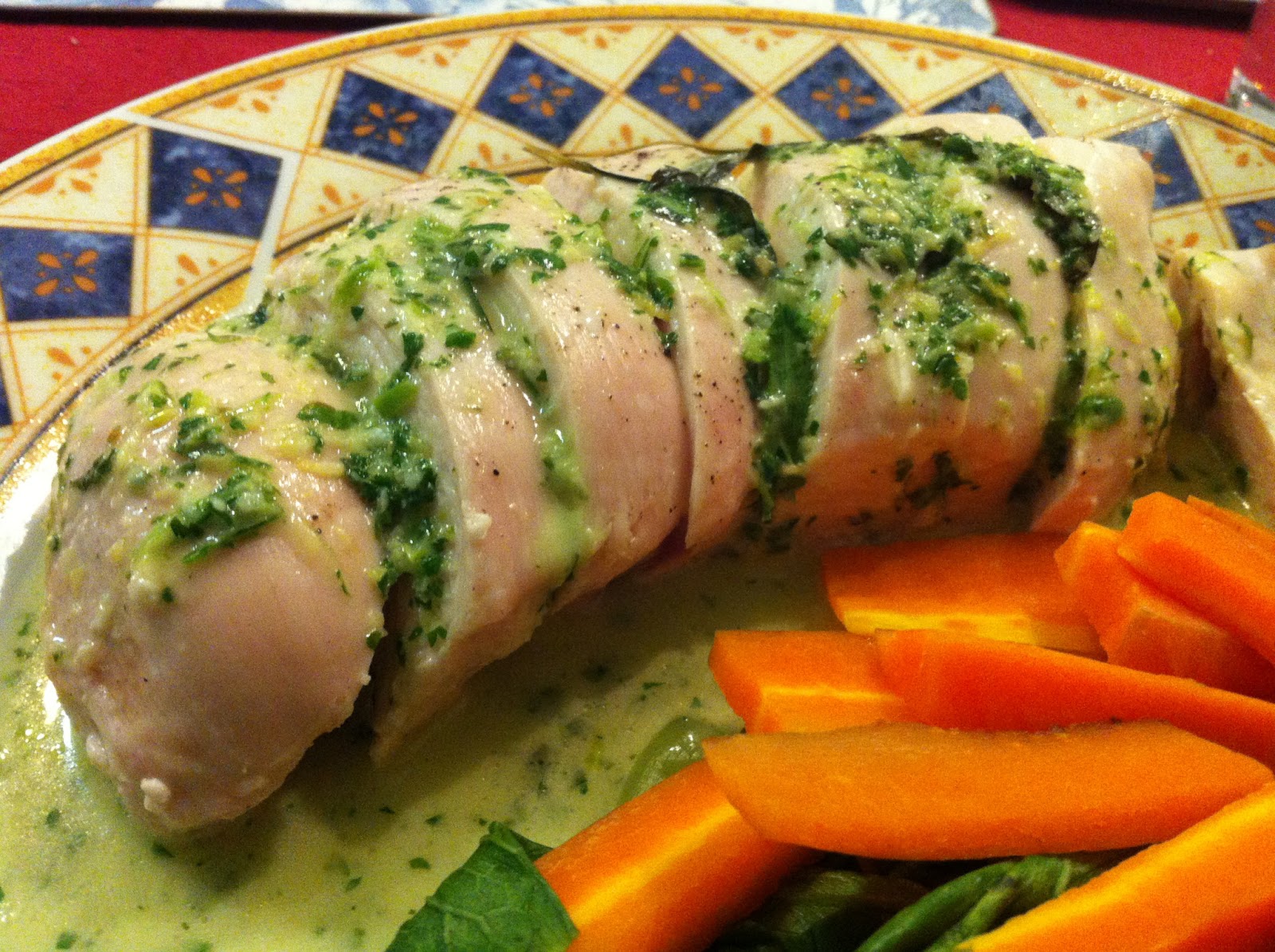
Chicken with Tarragon Salsa Verde
The last time my mum was coming to visit, I was looking through Nigellissima for inspiration. I mentally bookmarked the Chicken with Tarragon Salsa Verde recipe. When mum arrived, I handed her the book and asked for suggestions for dinner. Guess what took her fancy? Nigella explains why she lists weight of herbs - it's more about the ratio here, 1 part tarragon to 4 parts parsley. As it was just the 2 of us, I halved the quantities, and we both enjoyed some leftovers the next day. Here I'll put the full amount though. Serves 6-8.
Ingredients
For the chicken:
2 x 15 mL tablespoons olive oil
4 chicken breast fillets (preferably organic and corn-fed) with skin on (turns out it's impossible to find chicken with skin on around here)
small bunch fresh tarragon (2 sprigs for chicken plus more leaves for sauce)
pepper (preferably white coarsely ground), to taste (so, just regular old black pepper for me)
For the sauce:
leaves from small bunch fresh parsley (approx. 20g)
leaves from sprigs fresh tarragon (approx. 5g)
1 spring onion (including green part), roughly chopped
zest 1 unwaxed lemon and juice 1/2 lemon
1 teaspoon sea salt flakes or 1/2 teaspoon pouring salt, or to taste
6 x 15 mL tablespoons olive oil
Method
Preheat the oven to 220C.
Pour 1 tablespoon of the oil into a shallow ovenproof dish or roasting tin in which the chicken breast fillets will fit snugly and then arrange them in there skin-side up. Tuck 2 sprigs of tarragon in between the chicken pieces, add a good grinding of pepper and dribble another tablespoon of oil over them, then pop them in the oven for 20-30 minutes, or until the skins are golden and flesh tender.
Take out of the oven, and let the cooked chicken stand for 5-10 minutes in the tin while you prepare the sauce.
Put the parsley and tarragon leaves, along with the spring onion, lemon zest, salt flakes and 3 tablespoons olive oil into a suitable receptacle and, using a stick blender, whizz to a paste, adding the lemon juice and remaining 3 tablespoons olive oil slowly as you blend. Leave for a mo (seriously, that's what she wrote), while you slice the chicken.
Cut the chicken into thickish - 1cm or so - slices (if you need it to go further, then slice more thinly) and arrange on a platter.
Pour any juices that have collected in the tin into the tarragon salsa and whizz again with your stick blender, tasting for seasoning before dribbling the sauce over the tender sliced chicken.
This was really yummy, and really easy, and really good for a hot weather dish. No standing over a hot stove, just chuck stuff in the oven, whizz stuff up in the blender, make it look as pretty as desired, and done. It just might be my second-favourite method of cooking chicken (after poaching), and the sauce component is just begging for variations.
Ingredients
For the chicken:
2 x 15 mL tablespoons olive oil
4 chicken breast fillets (preferably organic and corn-fed) with skin on (turns out it's impossible to find chicken with skin on around here)
small bunch fresh tarragon (2 sprigs for chicken plus more leaves for sauce)
pepper (preferably white coarsely ground), to taste (so, just regular old black pepper for me)
For the sauce:
leaves from small bunch fresh parsley (approx. 20g)
leaves from sprigs fresh tarragon (approx. 5g)
1 spring onion (including green part), roughly chopped
zest 1 unwaxed lemon and juice 1/2 lemon
1 teaspoon sea salt flakes or 1/2 teaspoon pouring salt, or to taste
6 x 15 mL tablespoons olive oil
Method
Preheat the oven to 220C.
Pour 1 tablespoon of the oil into a shallow ovenproof dish or roasting tin in which the chicken breast fillets will fit snugly and then arrange them in there skin-side up. Tuck 2 sprigs of tarragon in between the chicken pieces, add a good grinding of pepper and dribble another tablespoon of oil over them, then pop them in the oven for 20-30 minutes, or until the skins are golden and flesh tender.
Take out of the oven, and let the cooked chicken stand for 5-10 minutes in the tin while you prepare the sauce.
Put the parsley and tarragon leaves, along with the spring onion, lemon zest, salt flakes and 3 tablespoons olive oil into a suitable receptacle and, using a stick blender, whizz to a paste, adding the lemon juice and remaining 3 tablespoons olive oil slowly as you blend. Leave for a mo (seriously, that's what she wrote), while you slice the chicken.
Cut the chicken into thickish - 1cm or so - slices (if you need it to go further, then slice more thinly) and arrange on a platter.
Pour any juices that have collected in the tin into the tarragon salsa and whizz again with your stick blender, tasting for seasoning before dribbling the sauce over the tender sliced chicken.
This was really yummy, and really easy, and really good for a hot weather dish. No standing over a hot stove, just chuck stuff in the oven, whizz stuff up in the blender, make it look as pretty as desired, and done. It just might be my second-favourite method of cooking chicken (after poaching), and the sauce component is just begging for variations.
Sunday, 6 January 2013
Pasta with Courgettes
Even though I made the Eggs in Purgatory on New Year's Day, that was not my first Nigella recipe. My first was this, the Pasta with Courgettes, that I made a few days after Christmas. I had exactly the right amount of zucchini. And, for me, it will be zucchini... Nigella says she would feel self-conscious calling them zucchini outside of North America or Italy, but they've always been that to me here Down Under. She also warns that this is a recipe for the palate, not for a photo. I agree... Meanwhile, I found this wine and couldn't not buy it - how cool is this label?! (Yes, I go for label more than anything else).
Ingredients:
200g casarecce pasta (or penne or farfalle)
salt for pasta water, to taste
2x15mL tablespoons garlic oil
4 spring onions, finely sliced
500g zucchini (preferably organic), finely diced
60mL dry white wine or vermouth
small bunch fresh parsley, chopped (I saw how much was needed and picked accordingly from the garden)
3x15mL tablespoons grated Parmesan, plus more (optional - but as if you wouldn't) for sprinkling
salt and pepper, to taste
2 teaspoons unsalted butter
Method:
Put a pan of water on for the pasta, salting generously (or to taste) when it comes to the boil, then add the casarecce - cooking as per packet instructions, though tasting a couple of minutes before they're meant to be ready - and get on with the sauce.
Put the garlic oil and chopped spring onions in a heavy-based pan (that comes with a lid) on medium heat and cook, stirring, for 1 minute.
Add the diced zucchini and cook for 5 minutes, stirring every now and again.
Add the wine or vermouth, letting it bubble up, followed by 2 tablespoons of the chopped parsley, salt to taste, then lower the heat, cover with the lid and cook for a further 5 minutes, by which time the zucchini should be gorgeously tender.
Tip the drained pasta back into its pan, add the braised zucchini, or add the pasta to the pan of zucchini, along with 3 tablespoons grated Parmesan and 4 tablespoons of pasta-cooking liquid. Combine thoroughly and taste to see if you wish to add more cheese or salt or pepper or, indeed, cooking liquid, then stir in the butter and most of the remaining parsley and divide between 2 warmed bowls, sprinkling with the rest of the parsley, and more Parmesan if wished, on serving.
I added some poached chicken (my new favourite method) so that there was some protein involved. Now, this is listed as serving 2. Admittedly, I add a protein serving each time. So far, I've had it with chicken, and with feta, and with roo, and with cheese, and I still have probably 2 serves to go. This makes a lot. Yummy though.
Ingredients:
200g casarecce pasta (or penne or farfalle)
salt for pasta water, to taste
2x15mL tablespoons garlic oil
4 spring onions, finely sliced
500g zucchini (preferably organic), finely diced
60mL dry white wine or vermouth
small bunch fresh parsley, chopped (I saw how much was needed and picked accordingly from the garden)
3x15mL tablespoons grated Parmesan, plus more (optional - but as if you wouldn't) for sprinkling
salt and pepper, to taste
2 teaspoons unsalted butter
Method:
Put a pan of water on for the pasta, salting generously (or to taste) when it comes to the boil, then add the casarecce - cooking as per packet instructions, though tasting a couple of minutes before they're meant to be ready - and get on with the sauce.
Put the garlic oil and chopped spring onions in a heavy-based pan (that comes with a lid) on medium heat and cook, stirring, for 1 minute.
Add the diced zucchini and cook for 5 minutes, stirring every now and again.
Add the wine or vermouth, letting it bubble up, followed by 2 tablespoons of the chopped parsley, salt to taste, then lower the heat, cover with the lid and cook for a further 5 minutes, by which time the zucchini should be gorgeously tender.
Tip the drained pasta back into its pan, add the braised zucchini, or add the pasta to the pan of zucchini, along with 3 tablespoons grated Parmesan and 4 tablespoons of pasta-cooking liquid. Combine thoroughly and taste to see if you wish to add more cheese or salt or pepper or, indeed, cooking liquid, then stir in the butter and most of the remaining parsley and divide between 2 warmed bowls, sprinkling with the rest of the parsley, and more Parmesan if wished, on serving.
I added some poached chicken (my new favourite method) so that there was some protein involved. Now, this is listed as serving 2. Admittedly, I add a protein serving each time. So far, I've had it with chicken, and with feta, and with roo, and with cheese, and I still have probably 2 serves to go. This makes a lot. Yummy though.
Tuesday, 1 January 2013
Eggs in Purgatory
I was given 2 recipe books for Christmas: Nigelissima and Cook with Jamie. I don't want to turn this into a food blog, but there will be a fair few cooking posts in the near future. Today's recipe was not the first (in fact, I have quite a backlog already), but as it's New Year's Day, and this was listed under the heading 'To Start the New Year', I thought I would post this one today. (See how far I've come?! I can do out-of-order posting, occasionally...). So, from Nigelissima, Eggs in Purgatory... Or what to eat when you're feeling like hell... (Yes, that's really the subheading. No, I didn't feel like hell this morning).
Ingredients:
1 x 15 mL tablespoon olive oil
1 small clove garlic, peeled
1/4 teaspoon dried chilli flakes
1 x 400g can chopped tomatoes
1/2 teaspoon sea salt flakes or 1/4 teaspoon pouring, or to taste
1-2 eggs
2-3 teaspoons grated Parmesan.
To serve:
grated Parmesan (optional); chilli oil (optional); bread (mandatory).
(I feel I should come clean here - I estimated with all the quantities except the tomatoes and eggs. And I didn't actually time anything, just estimated - but I have excellent internal timing, if I do say so myself).
Method:
Pour the olive oil into a small frying pan, then grate in (or mince and add) the garlic, scatter in the chilli flakes and put the pan over a medium heat, stirring, for 1 minute.
Tip in the tomatoes, stir in the salt (I don't use salt), and let it come to a bubble. It's got to be hot enough in which to poach an egg.
Crack in the egg/s, sprinkle the Parmesan over it, leaving some of the yellow yolk still exposed, and partially cover with a lid. Let it bubble for 5 minutes (make coffee and toast), by which time the white should be set and the yolk still runny, but keep an eye on it.
Remove from the heat and serve - if so wished - sprinkled with a little more Parmesan and some chilli oil, and some bread to dunk.
Super easy. Super-carbed as well though... but I can get over that. With the first mouthful, I realised just why this is great if you're not feeling so crash hot. And why this is such an apt name. Eggs in Purgatory are mighty fiery! Even with just a sprinkling of chilli flakes at the beginning, the whole dish was rather hot, and I had to get tissues and turn on the fan. This will be a dish for when I have a cold, for sure. The other tiny dilemma was just how to eat this - I thought a spoon might be necessary but it turned out that a fork was just fine.
Happy New Year!
Ingredients:
1 x 15 mL tablespoon olive oil
1 small clove garlic, peeled
1/4 teaspoon dried chilli flakes
1 x 400g can chopped tomatoes
1/2 teaspoon sea salt flakes or 1/4 teaspoon pouring, or to taste
1-2 eggs
2-3 teaspoons grated Parmesan.
To serve:
grated Parmesan (optional); chilli oil (optional); bread (mandatory).
(I feel I should come clean here - I estimated with all the quantities except the tomatoes and eggs. And I didn't actually time anything, just estimated - but I have excellent internal timing, if I do say so myself).
Method:
Pour the olive oil into a small frying pan, then grate in (or mince and add) the garlic, scatter in the chilli flakes and put the pan over a medium heat, stirring, for 1 minute.
Tip in the tomatoes, stir in the salt (I don't use salt), and let it come to a bubble. It's got to be hot enough in which to poach an egg.
Crack in the egg/s, sprinkle the Parmesan over it, leaving some of the yellow yolk still exposed, and partially cover with a lid. Let it bubble for 5 minutes (make coffee and toast), by which time the white should be set and the yolk still runny, but keep an eye on it.
Remove from the heat and serve - if so wished - sprinkled with a little more Parmesan and some chilli oil, and some bread to dunk.
Super easy. Super-carbed as well though... but I can get over that. With the first mouthful, I realised just why this is great if you're not feeling so crash hot. And why this is such an apt name. Eggs in Purgatory are mighty fiery! Even with just a sprinkling of chilli flakes at the beginning, the whole dish was rather hot, and I had to get tissues and turn on the fan. This will be a dish for when I have a cold, for sure. The other tiny dilemma was just how to eat this - I thought a spoon might be necessary but it turned out that a fork was just fine.
Happy New Year!
Subscribe to:
Posts (Atom)